Written by: Stephen Zhai — Sales Manager, HSD Optical
Published: August 2026 | Read time: 3 min
Somewhere in Nanjing, a rod lens is finished, measured, and placed in a tray. Then the part we made stops being ours.
For one customer, the next stop is a coating chamber we will never see. For another, it is a relay train being assembled by engineers we may never meet. We do not watch the first image come up on a screen. We see the numbers that leave with the part.
The COA is the handoff note. That is what this article is about.
Before it leaves, it stays on our bench
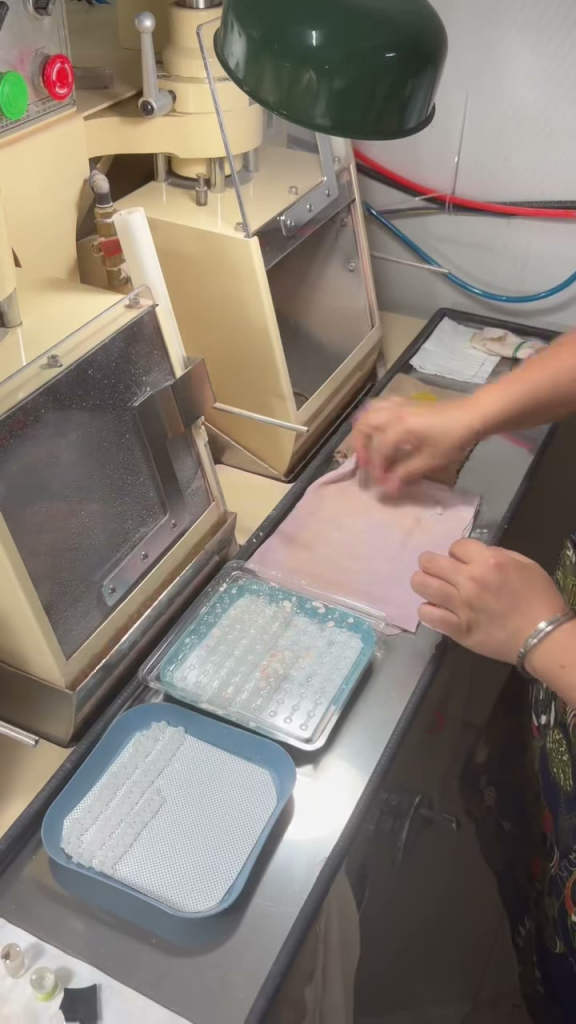
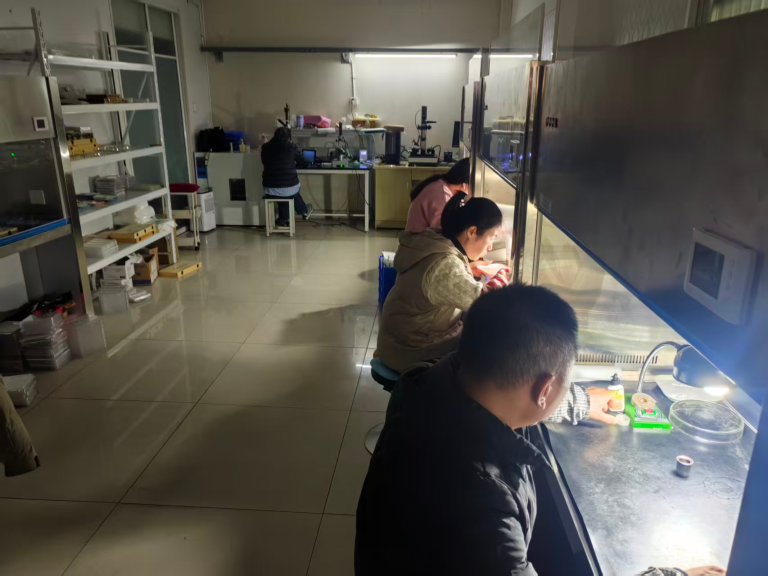
We are a 30-person cold-working shop. No trading, no forwarding drawings. When a drawing arrives, an engineer reviews it, we confirm the glass, and the work stays in our building: grinding, polishing, centration, surface inspection, and a batch COA with measured values.
The part does not travel far in our workshop. But it changes hands a lot, and every hand checks the same thing: is this still the part on the drawing?
Centration and surface: measured, not assumed
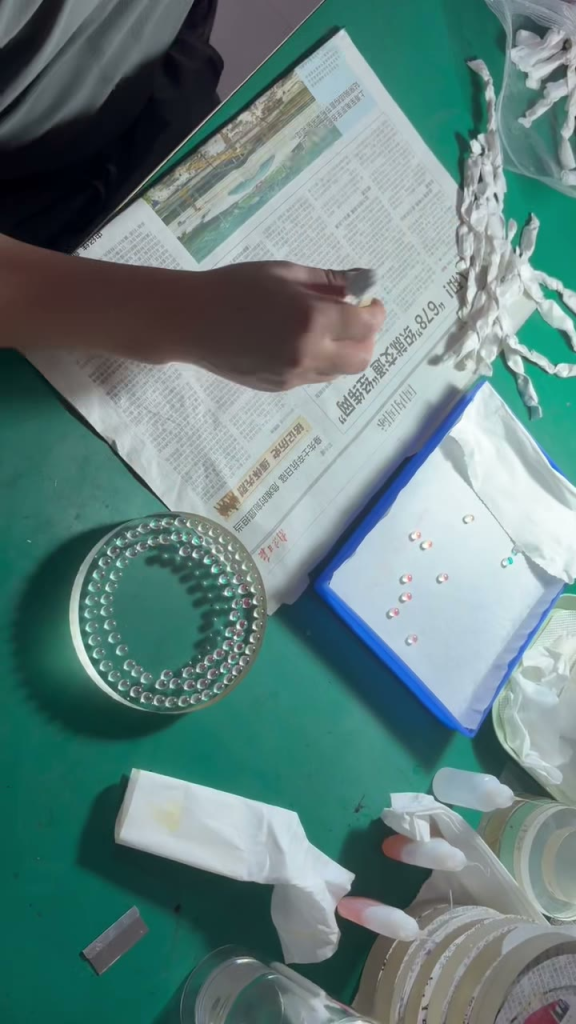
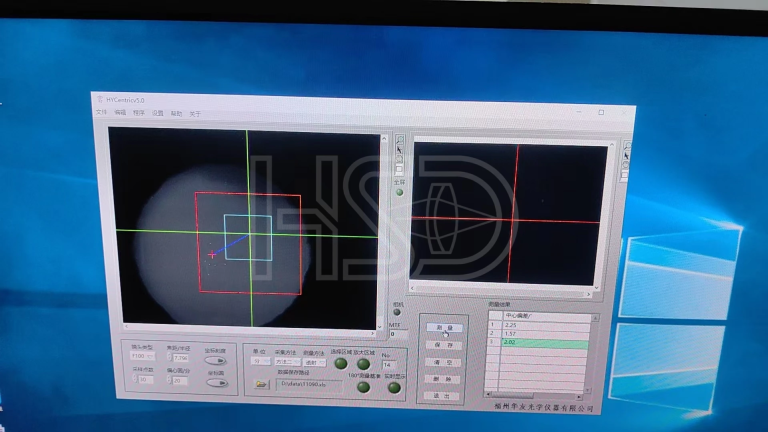
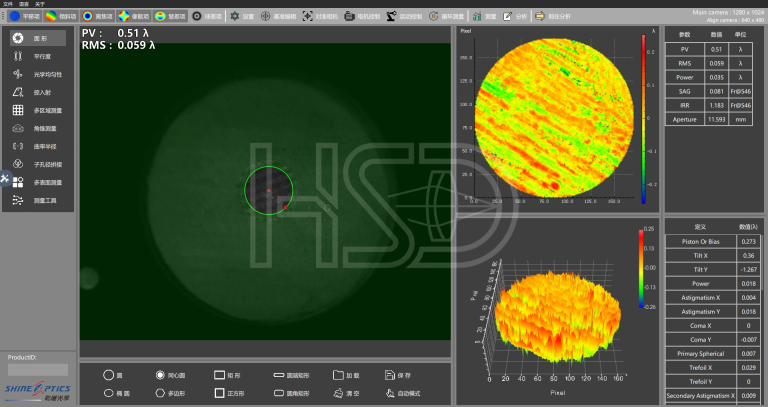
Before a part leaves the bench, it is inspected: centration, surface quality, and dimensions. One example from a real part: centration 2.02 arcmin, inside our standard limit of ≤3′. A passing surface map shows PV 0.51λ and RMS 0.059λ.
After inspection, the part takes one of two doors
Door one: coating laboratories. The blank leaves polished and uncoated. After that, the story is theirs: the chamber, the fixture, the coating stack, the final spectral check. We do not know their coating process, and we do not need to. Our job ends where the blank must be right: diameter fit, surface quality, edge chipping, and a COA that says what we measured. More on uncoated blanks.
Door two: endoscope OEMs. The part leaves coated and ready for a relay train. In their hands, one rod becomes part of a longer optical chain, where small errors start to add up. That is exactly why the numbers matter before the part leaves. More for endoscope OEMs.
The COA is the handoff note
Most buyers never see our workshop. What they do see is a COA. A COA can be a formality, or it can be a record. Ours lists measured values: centration, surface, dimensions, not a “within spec” checkbox. If something drifts between batches, the number shows it. That is the point.
We do not see the first image the endoscope takes. But that image carries a set of numbers that started on our bench. The drawing you sent, the measurements we recorded, and the image your customer sees are one story. We only write the part we can prove.
Specifications we hold
| Parameter | Standard |
|---|---|
| Diameter | Φ1.19–8.0 mm, 245 standard sizes |
| Diameter fit | −0.02/−0.04 mm |
| Centration | ≤3′, tighter per drawing |
| Surface | 40/20 per MIL-PRF-13830B |
| Edge chipping | ≤0.05 mm |
| Documentation | Batch COA with measured values |
| Quote | Within 24 hours of drawing, NDA standard |
Send Your Drawing
We will tell you which door your part goes through, and what we will measure before it leaves. Quote within 24 hours; NDA on request before the technical discussion.
Rod Lens Blanks for Coating Labs
Finished Lenses for Endoscope OEMs
FAQ — Where Does a Finished Rod Lens Go?
Where does a rod lens go after manufacturing?
Either as an uncoated blank to a coating laboratory, or as a finished coated lens to an endoscope OEM. Both paths start with the same drawing and end with a batch COA with measured values.
What is on your COA?
Measured values: centration, surface, dimensions, and the inspection method used. We do not write “within spec” checkboxes; we write numbers you can feed into your SPC system.
Can you also coat rod lenses?
Yes. For endoscope OEMs we supply finished, coated rod lenses and micro lenses. For coating laboratories we supply only uncoated, precision-finished blanks.
How fast can we get a quote?
Within 24 hours of receiving your drawing. NDA is standard and can be signed before the technical discussion. MOQ from 10 pieces.
About HSD Optical
HSD Optical is a precision manufacturer operating since 2009 with a 30-person in-house cold-working team and ISO 9001:2015. We make rod lenses and micro lenses to print: uncoated blanks for coating laboratories and finished coated lenses for endoscope OEMs.
Related reading
- Rod lenses — product line
- Uncoated rod lens blanks for coating labs
- Finished lenses for endoscope OEMs
- How to read a rod lens COA
- Send your drawing
Specifications confirmed at inquiry. HSD Optical — ISO 9001:2015.