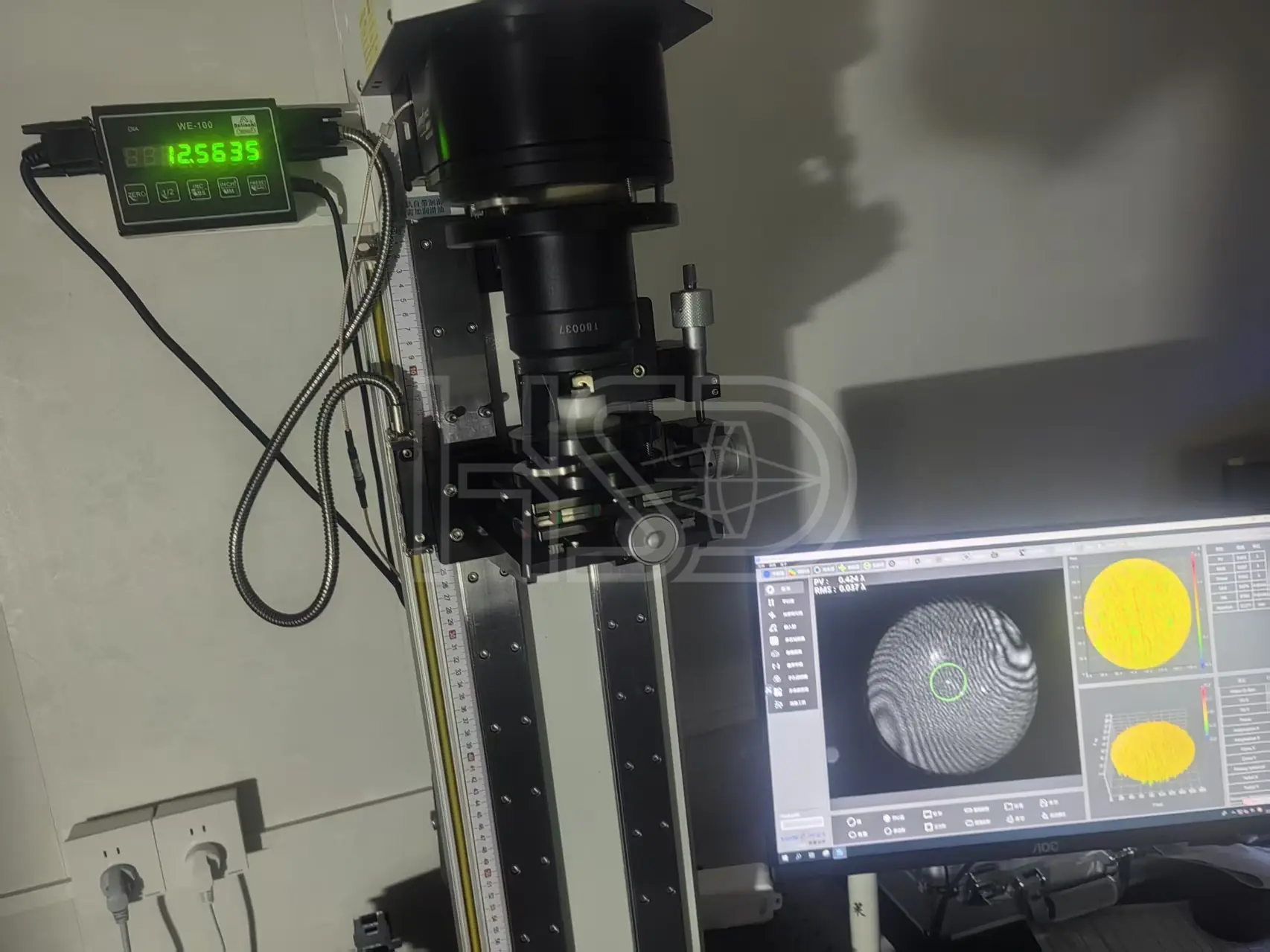
Surface Figure
Surface form tested by interferometry — PV/RMS values from the actual measurement.
1 · The relay train decides the image. ENT scopes are short, but the relay still has to pass the image cleanly — one rod with centration error and the picture softens at the eyepiece.
How HSD avoids it: centration is verified on a per-batch sampling plan per ISO 10110-6, with measured values on the batch COA.
2 · Fit is a package deal. Diameter, length and centration have to come from one consistent set, or assembly tolerances stack up against you.
How HSD avoids it: batch rods are finished from the same drawing package with the same tolerances throughout.
3 · The “manufacturer” may be a trader. Nobody can own a root cause when drawings are spread across shops.
How HSD avoids it: we are the factory — a 30-person precision optical workshop in Nanjing; engineers review your drawing directly.
4 · Traceability is a compliance question. Medical programs need batch numbers and measured values, not pass/fail claims.
How HSD avoids it: every batch COA carries measured values plus material certificates.
ENT builds go smoother when the rod set is one system: one tolerance package, one measurement method, one COA format.
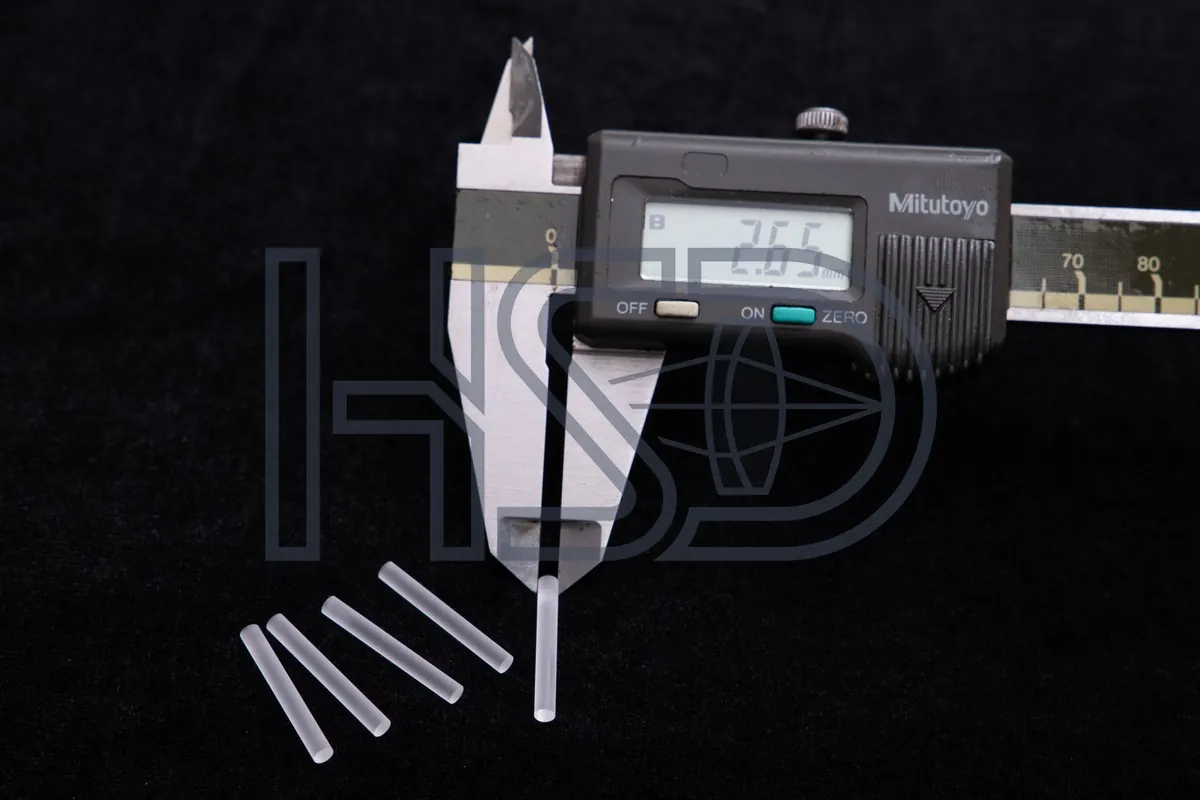
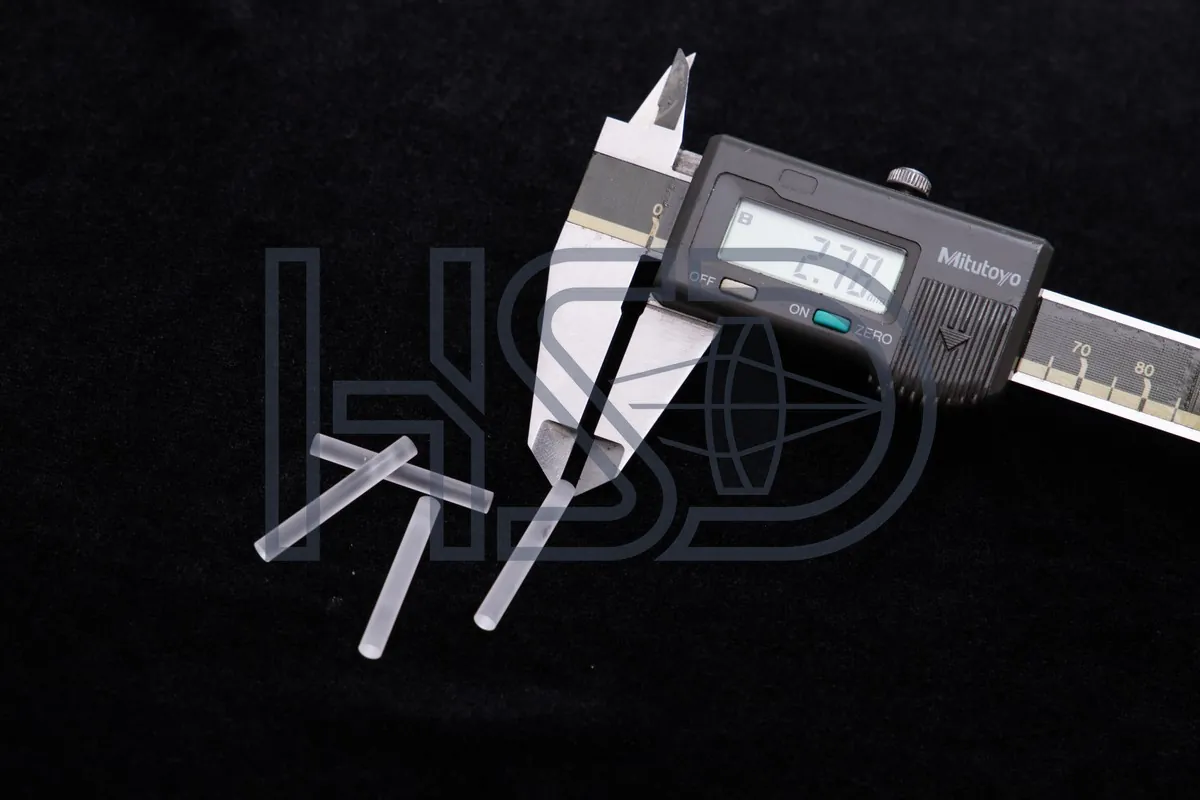
Production photos in the diameter range used for ENT optics, labeled by diameter. Final specifications per your drawing.
Scope of supply: relay rods · slim relay rods (Φ1.19–1.96) · rear rod lenses (Φ6 class) · special diameter/length rod lenses · uncoated rod lens blanks — all make-to-print per your drawing.
| Item | Specification |
|---|---|
| Rod lens diameter range | Φ1.19–8.0 mm (ENT relay rods typically Φ2.7–4.0) |
| Diameter tolerance | −0.02 / −0.04 mm (fit) |
| Centration | ≤3′, tighter per drawing |
| Surface quality | 40/20 · MIL-PRF-13830B / ISO 10110-7 5/40-20 |
| Edge chipping | ≤0.05 mm, per drawing · ISO 10110-7 E 0.05 |
| Coating | BBAR 400–700 nm, R<0.5% (per drawing) |
| Glass | Per drawing: JGS1 / H-ZF / H-LAK / H-K9L / N-SK15; material certificates with each batch |
| Length tolerance | Per drawing |
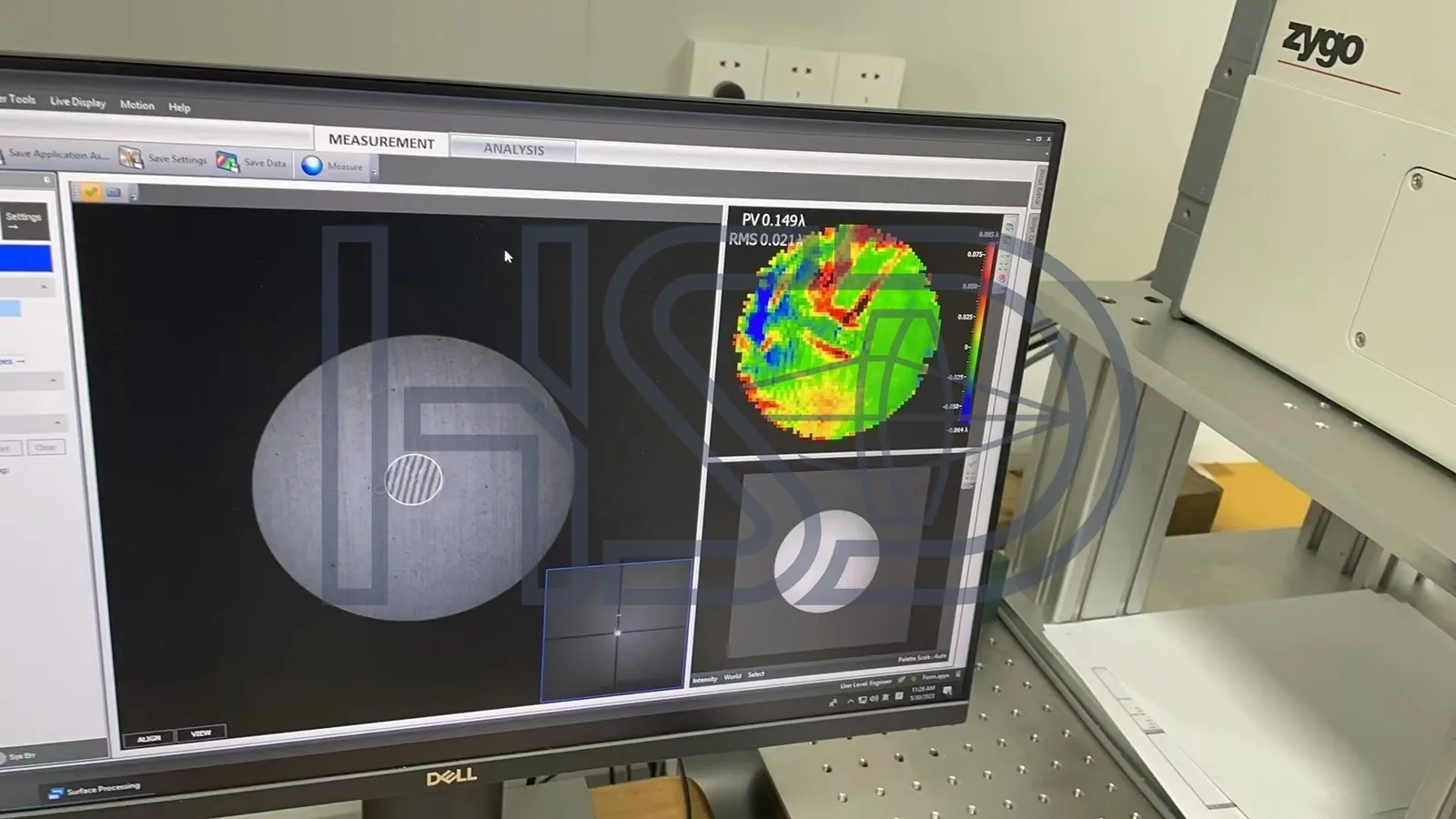
On ENT rods, we report centration and surface data per batch instead of a pass/fail line, so your incoming inspection has real numbers to check.
If an ENT relay drawing is on your desk, send it over; engineering will confirm what we can hold and quote within 24 hours.
Send Your Drawing → Email [email protected]Application context
ENT and sinuscope rod lenses use slim diameters, typically Φ2.7–4.0 mm, with short relay steps for angled or narrow optical trains. This page is the make-to-print route for those drawings.
Check on the drawing: slim diameter, short relay step and any angled interface; the build type is confirmed before production.
The drawing with diameter, relay length and centration target. Engineering reviews it and confirms feasibility within 24 hours.
Inspection & Metrology
Every batch is verified with interferometry, centration measurement and surface inspection. You get the actual measured values, not a “within spec” checkbox.
Surface form tested by interferometry — PV/RMS values from the actual measurement.
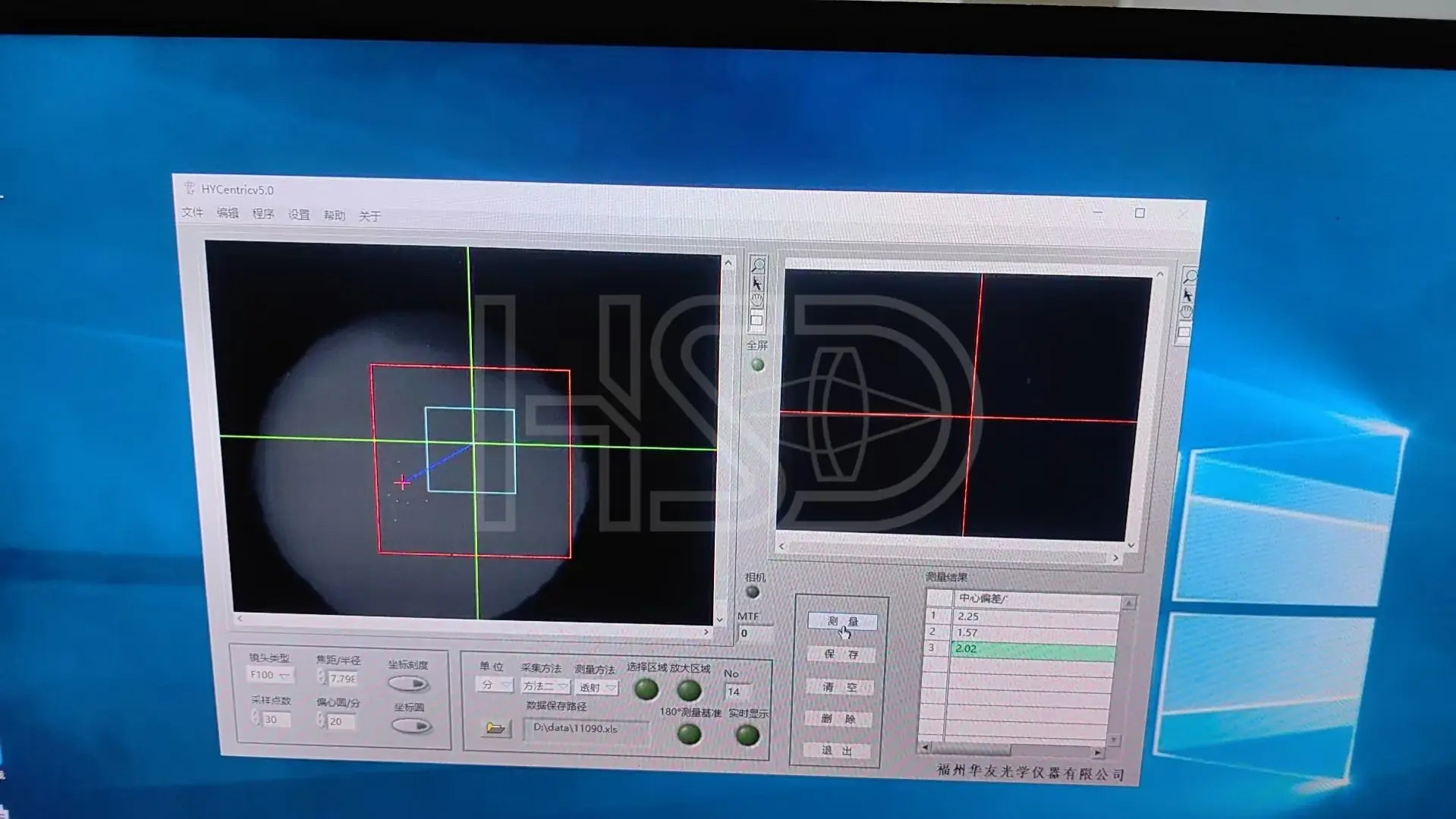
Centration checked on the centration station, typically ≤3′. The reading shown is from a real part — 2.02′.
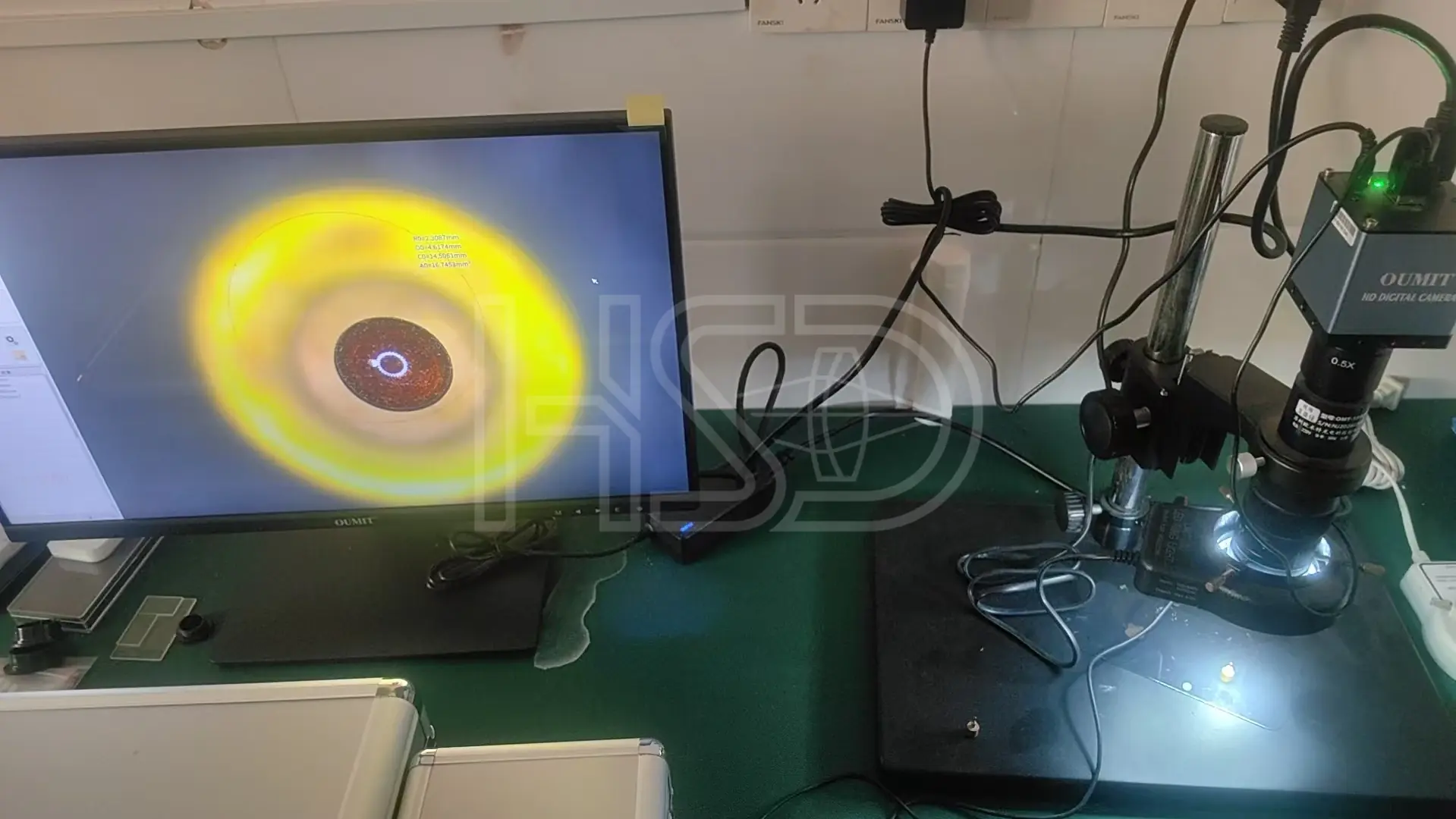
Surface and edge quality inspected under a video microscope — scratch/dig per MIL-PRF-13830B.
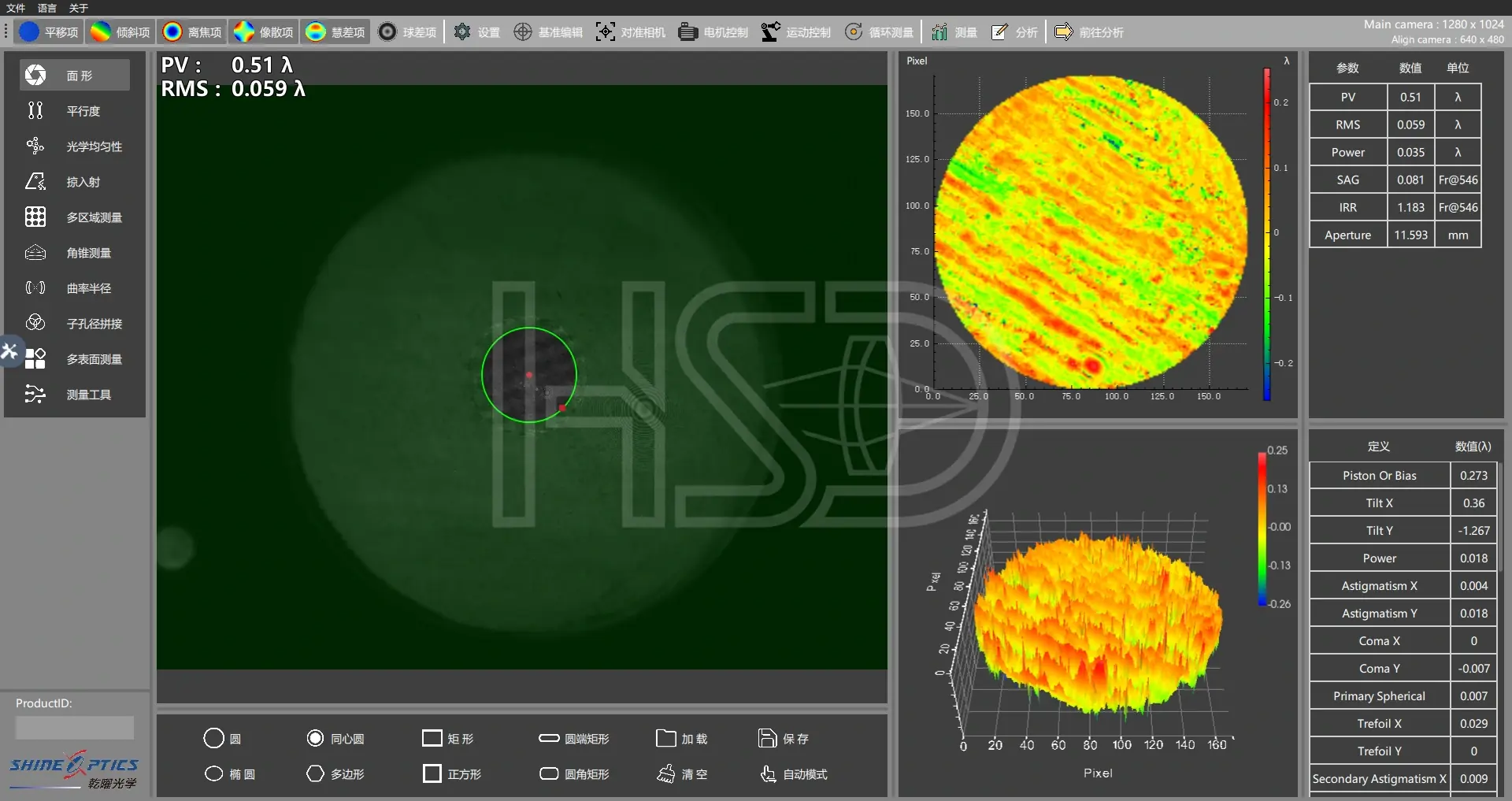
A passing surface from a production run: PV 0.51λ, RMS 0.059λ. Rejects never leave the workshop.
Measured COA per batch — ask for a sample COA with your quote. · Learn how to read a surface map →
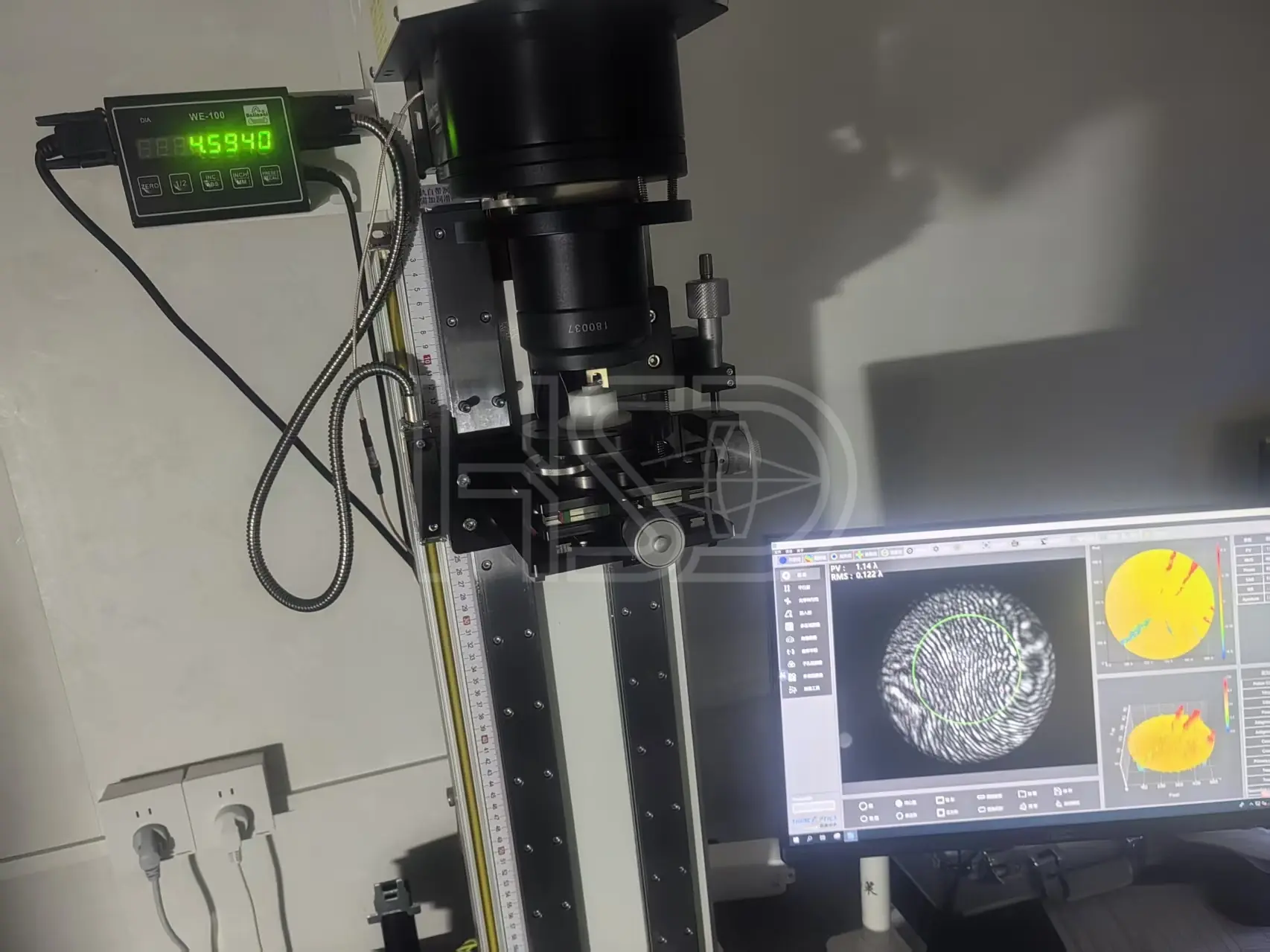
Striation defect caught on an ENT rod surface — PV 1.14λ.
Real measurement, kept on file. Your COA gets the same kind of data.
Watch rod lens grinding, polishing, centration measurement and final inspection in real time. All information shared during the tour is confidential — your NDA is welcome.
Schedule a Live Video Tour