Written by: Stephen Zhai — Sales Manager, HSD Optical
Published: August 2026 | Read time: 7 min
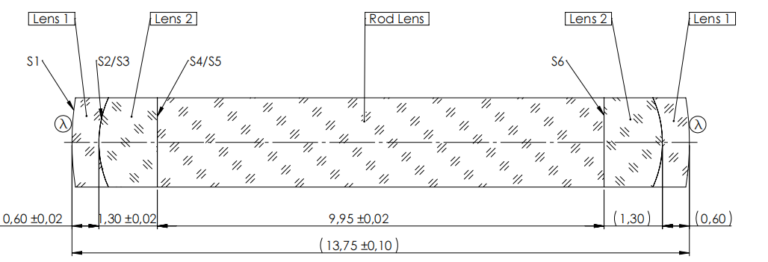
Centration is the angle between a rod lens’s optical axis and its mechanical axis. If it isn’t measured and printed on the batch COA — with actual values, not a pass/fail line — you’re buying yield risk. For rod lens blanks, require a measured centration spec (e.g., ≤ 3′) plus batch distribution data from your supplier.
Here’s the failure mode we see when a blank supplier ships a pass/fail slip instead of measured data. An endoscope relay train doesn’t resolve. Image edges go hazy. A batch that should have been fine suddenly isn’t, and nobody can say which lens caused it — because nobody measured centration on the blanks.
It’s rarely one bad lens. It’s a small decentration on several lenses, compounding through 10 or 12 elements until the image falls apart. And because the blanks came with “within spec” but no actual numbers, the whole batch becomes suspect. That’s the real cost of skipping the measurement: you don’t just lose a batch, you lose the ability to explain it.
This happens more often than you’d think. And it’s almost always avoidable.
The Part Nobody Wants to Talk About
Rod lens centration cannot be corrected downstream: you cannot polish a blank back into centration, coat it straight, or align the error out in assembly. When 10 or 12 rod lenses stack in a relay train, every micron of decentration adds up through the optical path.
A 3 µm offset on lens #3 becomes 6 µm by lens #6 and 12 µm by the distal end. Your MTF is gone before the light even reaches the coupler. In a high-resolution endoscope delivering 20,000 pixels or more, that’s the difference between a diagnostic-grade image and a rejected shipment.
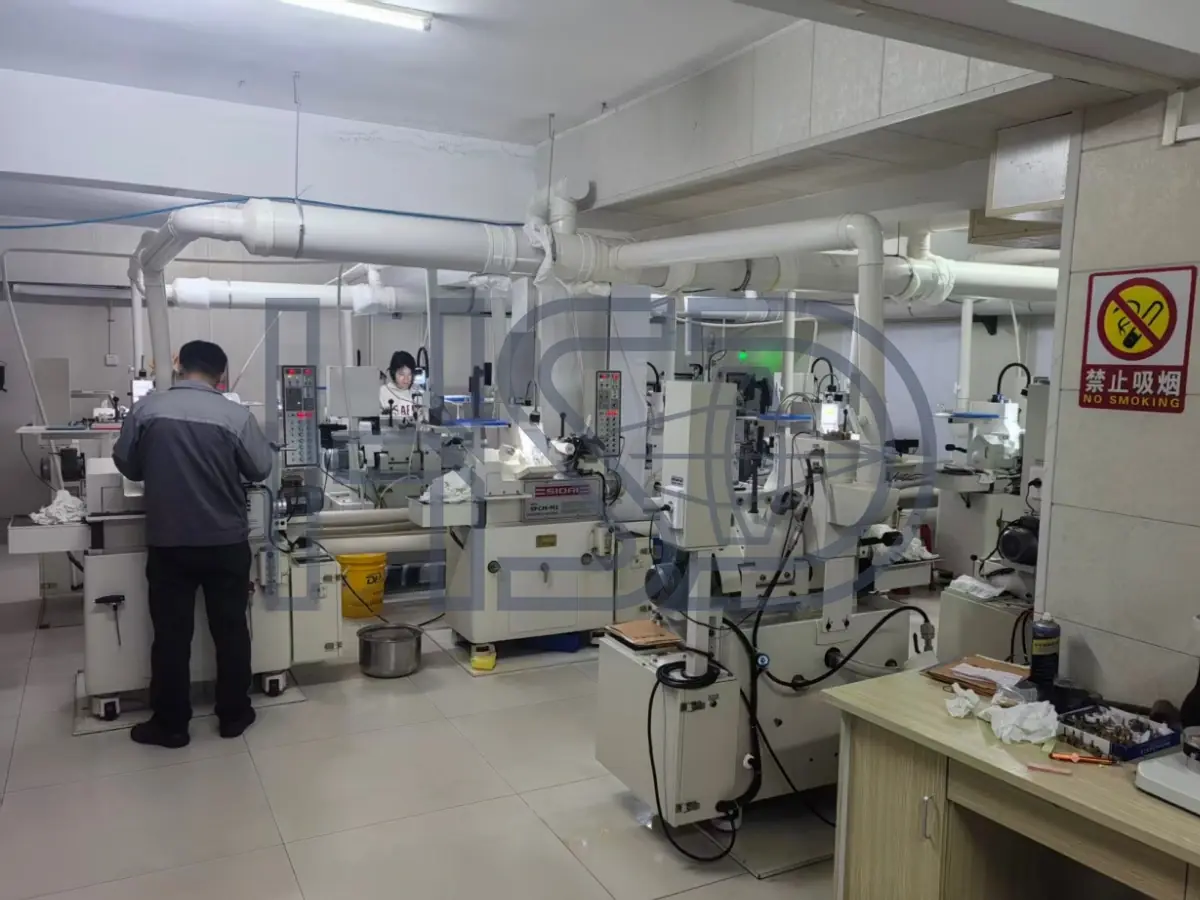
The blank is where this is won or lost. Not at incoming inspection. Not at assembly. At the grinding spindle.
If your current supplier can’t give you a batch centration histogram, you’re gambling. Ask for one. If they push back — “that’s proprietary” or “we don’t normally provide that” — that’s your signal. Quality suppliers measure it anyway. The ones who won’t share the data are hiding something.
How Centration Is Actually Measured
There are two ways to measure rod lens centration, and they give you very different numbers.
Vertical-axis testing mounts the lens vertically and rotates it. For lenses above Φ2 mm, this works fine. But for micro rods — the Φ1.0 mm and Φ1.19 mm blanks that go into ureteroscopes and mini endoscopes — gravity flexes the lens in the chuck. The test reports a better centration number than the lens actually has. The error doesn’t show up until assembly, when it’s too late.
Horizontal-axis testing uses V-groove support so the lens rests on its cylindrical surface. Gravity acts perpendicular to the optical axis, not along it. This gives you the true centration value — the number your assembly line will actually see. It’s slower and requires more careful setup, but for anything under Φ2 mm, it’s the only measurement that means anything.
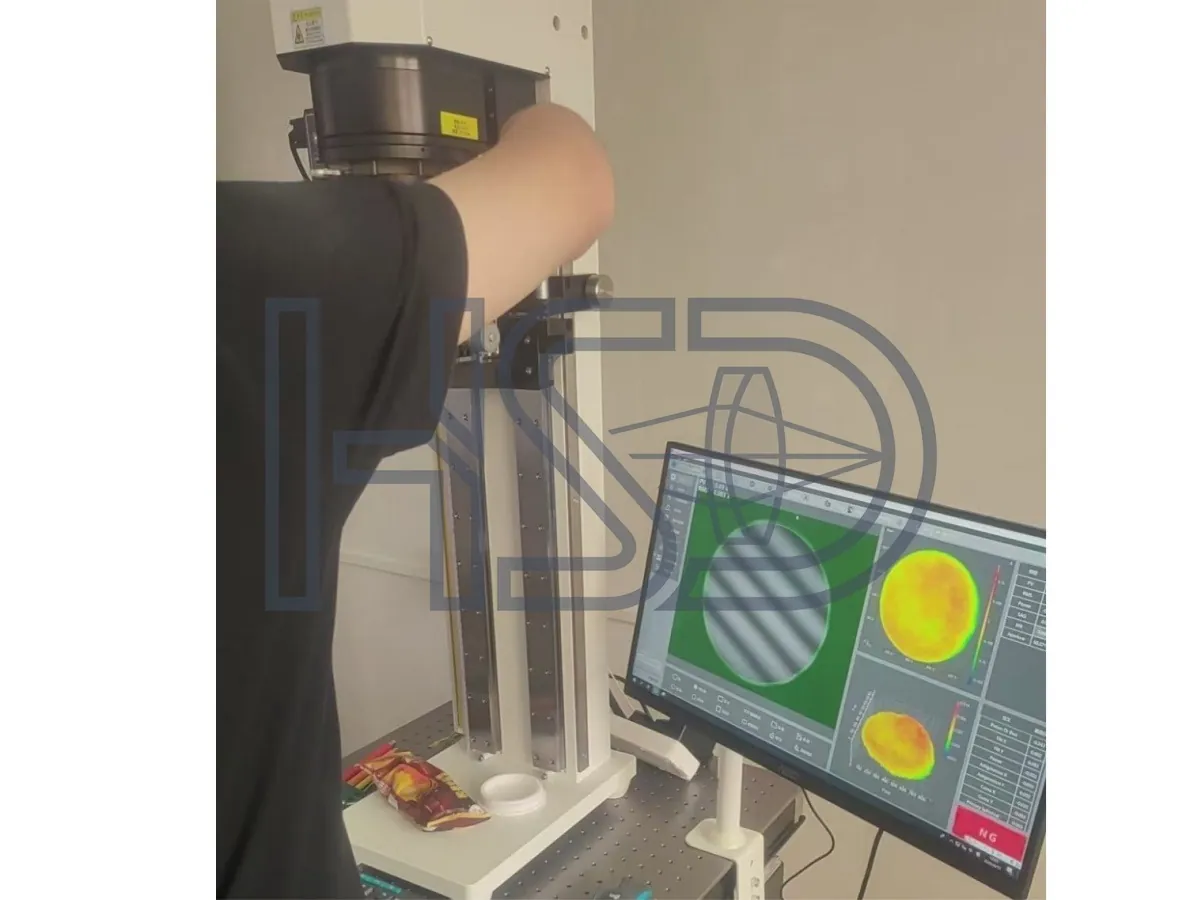
We use horizontal-axis testing exclusively for micro rods. Every blank under Φ2 mm gets measured this way, and the actual measured value goes on the COA per ISO 10110 requirements. Not a checkbox. A number.
What We Actually Do
We make uncoated rod lens blanks — Φ1.2–8.0 mm for rod lenses, plus Φ1.0 / Φ1.19 mm micro blanks. Standard diameters and custom. Since 2009, same factory, same engineers. We don’t run a marketplace where we flip parts from third-shift polishing houses. We make them.
A few things that matter if you’re buying:
- We don’t substitute glass. Whatever grade your drawing calls out — that’s what you get. No “equivalent” without your sign-off. Index mismatch in your relay design changes element spacing — we won’t make that call for you.
- Every blank is measured on a horizontal-axis centration setup with V-groove support. Vertical testers give you a gravity-flex number on micro rods, not a centration number. We don’t use them for anything under Φ2 mm.
- Every batch ships with a COA. Actual measured values — centration, diameter, length, surface quality per ISO 10110. Not a checkbox. Numbers.
Specs That Actually Matter When You’re Buying
| Spec | What to Demand |
|---|---|
| Diameter tolerance | -0.02 to -0.04 mm (fit tolerance). Loose diameter → tilt in the bore → another centration problem you didn’t need. |
| Centration | < 3 arcmin, with measured COA data per batch. Not “within spec.” The actual number. |
| Surface quality | 40/20 per MIL-PRF-13830B (ISO 10110 codes on request). Cylinder scatter kills relay contrast. |
| Glass | Exact grade per your drawing. Index mismatch changes relay spacing in your optical design — don’t let a supplier make that call for you. |
| Coating | Uncoated unless you need AR. Most coating shops want bare blanks for their own line. |
What This Means for OEM Assemblers
If you’re an OEM assembler — not a coating shop, but the company that specs, buys, and installs finished lenses into endoscope or ureteroscope relay trains — centration matters just as much, but your risk looks different.
You’re not grinding blanks. You’re buying fully coated, ready-to-assemble rod lenses and expecting them to drop into your relay train without re-measuring every piece. That only works if your supplier controlled centration at the blank stage — before coating, before cementing, before the cost of a failed assembly gets baked in.
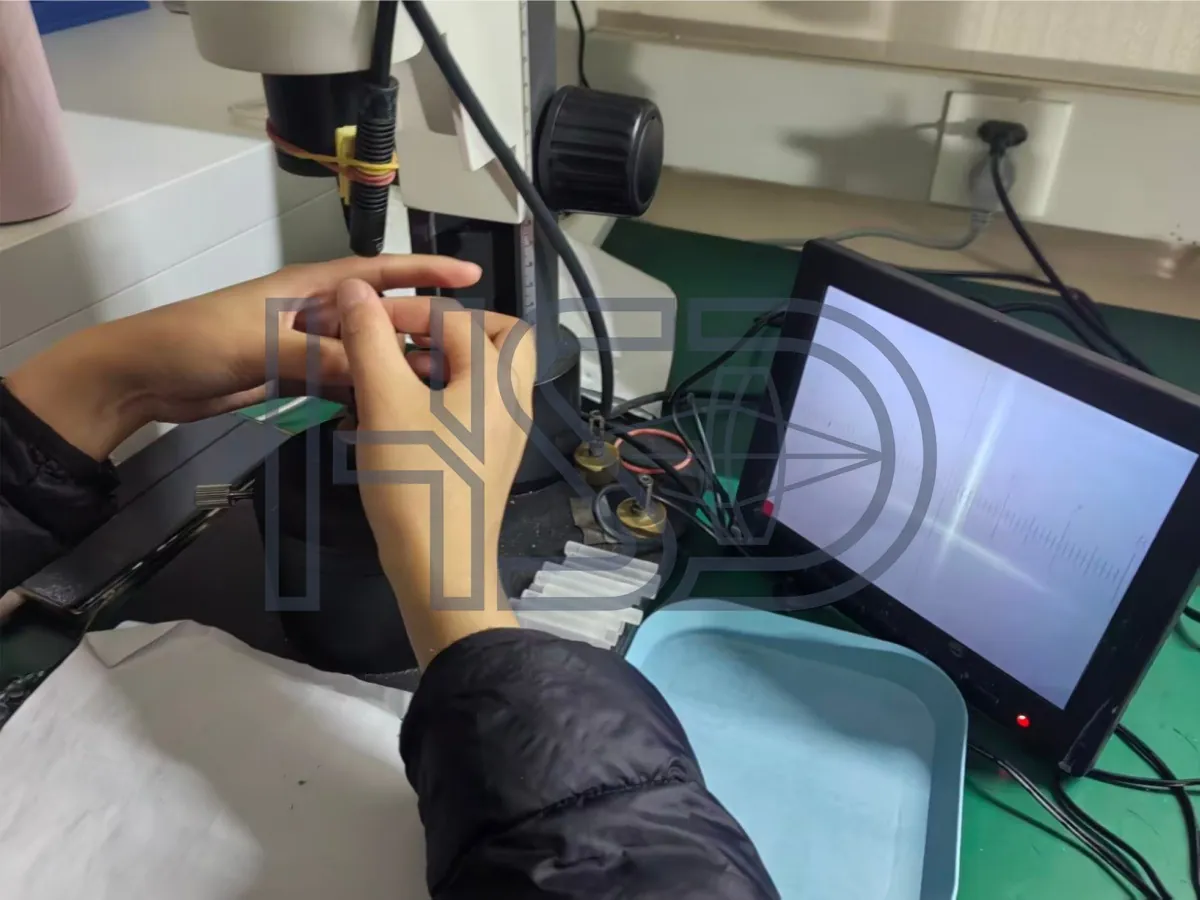
For assemblers, we offer broadband AR-coated rod lenses (400–700 nm) across 245 standard sizes, all built from the same centration-controlled blanks. The same COA data follows the part through coating. You get measured centration values on the finished lens, not just the blank. That’s the data your incoming inspection team needs to skip 100% part-by-part measurement and move to batch audit against the COA — which is exactly what our coating-lab customers do.
Whether you’re a coating house buying uncoated blanks or an assembler buying finished lenses, the centration spec is the same: ≤ 3 arcmin, measured, documented, on every COA.
What the COA Data Actually Buys You
Measured centration values on every batch change how your incoming inspection works:
- Batch auditing instead of 100% part-by-part checks — when the COA carries real numbers, your team verifies against the data instead of re-measuring every lens.
- SPC becomes possible — a centration database built from our COA values lets you watch process drift before it costs you a batch.
- Fewer mystery-box shipments — pass/fail slips hide the answer; measured values give you the cause.
For coating shops, it’s even simpler. You coat. You assemble. It works. For OEM assemblers buying finished lenses, the same centration data means your incoming inspection can trust the COA instead of re-measuring every lens on the line.
Ready to Test Us?
Send us your spec — diameter, length, glass type, coating preference, rough volume. We’ll send back a datasheet, a sample COA format, and a lead time. Usually within 24 hours.
No pitch deck. No “solutions provider” language. Just the numbers.
If you want an NDA first, that’s standard. Say so and we’ll get one in place before the technical discussion.
Send your spec. Get a quote with real COA data.
NDA-protected. Response within 24 hours.
Send Us Your Spec — Get a Quote →
Browse Rod Lens Product Line
FAQ — Rod Lens Centration Questions, Answered
What is centration in rod lenses?
Centration measures how well the optical axis of a rod lens aligns with its mechanical axis. In practice, it’s the tilt or offset between the polished cylindrical surface and the center of curvature of the end faces. For medical endoscope relay trains, even 3–5 µm of decentration compounds across 10+ lenses and destroys image quality.
What centration spec should I require from a rod lens blank supplier?
Demand ≤ 3 arcmin with measured COA data per batch — not a pass/fail checkbox. The actual number matters because it feeds into your assembly tolerance stack. If you’re building high-resolution endoscopes or ureteroscopes, ask for ≤ 2 arcmin.
Do you provide batch centration histograms?
Yes. Every shipment from HSD Optical includes a COA with measured centration values per batch — inspected on a per-batch sampling plan per ISO 10110-6, with a batch histogram on request. No averages. No “within spec.” Raw numbers you can feed into your SPC system.
What’s the difference between horizontal and vertical centration testing?
Horizontal-axis testing (V-groove support) gives the true centration value. Vertical testing introduces gravity-induced flex on micro rods (Φ2 mm and under), producing an artificially better number. We use horizontal testing exclusively for anything under Φ2 mm — because that’s the number your assembly line actually sees.
What glass types do you stock for rod lens blanks?
Glass is always per your drawing — we source and certify the exact grade your print calls out, from JGS1, H-ZF, H-LAK and H-K9L to N-SK15, across 245 standard rod lens sizes. We don’t substitute without written approval: an index mismatch in your relay design changes element spacing, so we won’t make that call for you.
What’s your MOQ for custom rod lens blanks?
MOQ 10 pcs for samples and standard diameters; production batches are typically 100+ pcs. Custom sizes and tight tolerances may require a higher MOQ depending on tooling. Contact us with your spec and we’ll confirm within 24 hours.
How can I verify your quality before placing a large order?
Two ways:
- Request a sample COA — we’ll send you a real batch COA so you can see the format and data granularity.
- Order a trial batch — 50–100 pcs, tested to your spec. If it meets your standard, you scale. If not, you walk away with zero commitment.
Do you offer NDA protection?
Yes. An NDA is signed before any technical drawing is shared — standard since 2009 and covering part drawings, glass grades and coating specs. Mention it in your inquiry and we’ll have one in place the same day.
About HSD Optical
Founded in 2009, HSD Optical has been making precision rod lenses for over 15 years. We supply uncoated blanks to endoscope OEMs, coating shops, and integrators across Europe, North America, and Asia. ISO 9001. Every batch: measured, documented, COA included. NDA as standard.
HSD Optical — Precision Rod Lens & Micro Lens Supplier for Endoscope & Ureteroscope Tier 1 Assemblers
Specifications subject to confirmation at inquiry. Customer details anonymized. HSD Optical — ISO 9001:2015.
Related
- Rod Lens Product Line
- Micro Lens Product Line
- Solutions for Coating Laboratories
- Solutions for OEM Assemblers
- Contact Engineering